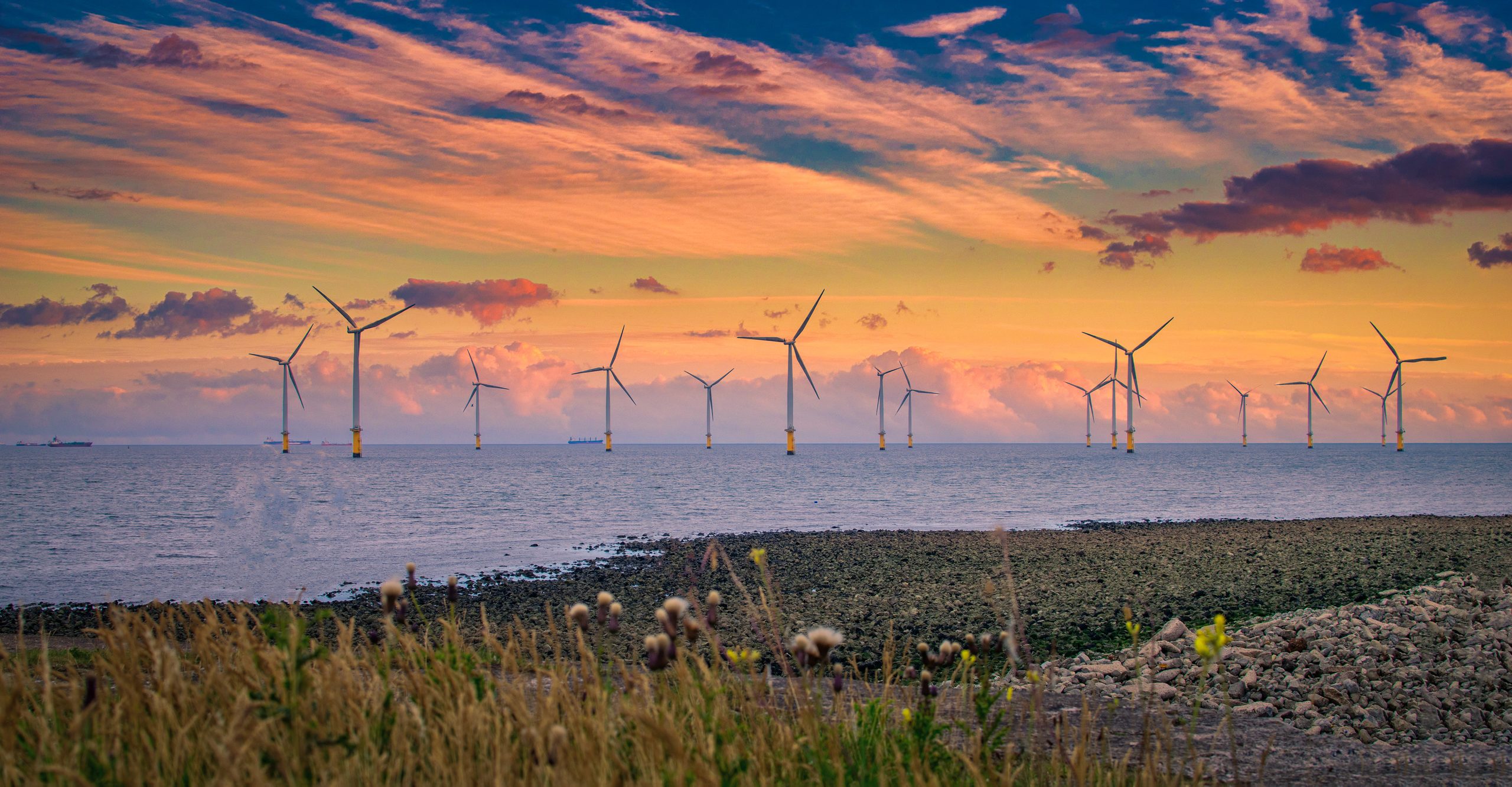
East Lammermuir is facing an unprecedented concentration of major energy infrastructure developments, with several developments affecting communities at the same time. ELCC works with residents, developers and public bodies to represent community interests, explain what developments mean locally and help residents find authoritative project information.
ELCC is not a developer, planning authority or enforcement authority. It represents community views and helps residents reach the organisation responsible for decisions, regulation or action. Information supplied by developers is identified as such; publishing it does not imply ELCC’s endorsement of a project or proposal.
On this page
Energy developments
Latest updates
Energy Projects Partnership FAQs
Monitoring and reporting FAQs
Map
Community benefits
Energy Projects Partnership
The Energy Projects Partnership helps coordinate information and collaboration between the local community, developers, transmission owners, and East Lothian Council.
The vision of the partnership is for East Lammermuir to be a better place as a result of the energy developments, as set out in the East Lammermuir Local Place Plan.
Beth Landon — Energy Projects Partnership Manager
Beth’s role is to ensure the community have a voice through all stages of the lifecycle of the energy developments.
Contact Beth at beth@elep.scot for help understanding project information or raising a local concern with the appropriate developer or public body.
Key resident actions
Find information about an energy project
Information about the energy projects, including opportunities to have your say and project contact details can be found on the East Lammermuir Energy Developments website.
External website — opens in a new tab
Report a construction problem
Report issues arising from energy-project construction using the dedicated reporting service.
External website — opens in a new tab
Stay informed
Receive a weekly bulletin from East Lammermuir Energy Partnership.
Read Beth’s Blog
Read reflections from Beth, the Energy Projects Partnership Manager.
ELCC’s planning application records
Read ELCC’s recorded consideration, positions and representations. For current application status and documents, follow the official link in the relevant record.
For Torness background and dated liaison records, see Torness Power Station.
Latest energy-project updates
-
Berwick Bank’s removal of the variation request for Seabird Compensation Plan
Berwick Bank Offshore Windfarm’s removal of the variation request for the Seabird Compensation Plan, means they will submit one plan for the whole site rather than phasing.
-
Energy Projects Traffic and Travel Drop in
A Community Traffic and Travel Forum drop-in event took place on Tuesday 20th October in Innerwick Outdoor Centre.. Project information from the event is now available to view online.
-
Energy Developments Meeting September 2026
At the 2026 annual public meeting of the Energy Projects Partnership, attendees looked at the East Lammermuir Principles of Community Engagement.
-
Update on Springfield Public Legal Inquiry
Reporters ruling on the proposed Bowshiel Solar Farm in the Scottish Borders, relating to Springfield Solar in East Lammermuir
-
Braxbess Innerwick Storage Webinar
Following the webinar on Thursday 22 October, comments on the proposal for Innerwick Storage to operate part of the consented Braxbess project can be sent to innerwickstorage@pegasusgroup.co.uk until Monday 9 November. Further opportunity to comment as part of the formal application process will follow if an application is submitted to the Energy Consents Unit.
-
SPRINGFIELD SOLAR & BESS – Consultation events
Opportunity to comment before 30th October on additional information relating to the Springfield application. (Lammermuir Alliance)
Energy Projects News Bulletin
Get regular updates about energy projects, construction, planning, traffic and local meetings in East Lammermuir.
Read the latest bulletin
Read the most recent Energy Projects News Bulletin.
External website — opens in a new tab
Past issues
Browse previous editions of the Energy Projects News Bulletin.
External website — opens in a new tab
Energy Projects Partnership FAQs
Why is the Energy Projects Partnership needed?
East Lammermuir is at the rural edge of East Lothian within the Dunbar and East Linton Ward and includes the villages of Innerwick, Oldhamstocks, Spott and Stenton. Multiple net zero projects are being planned in the area and the East Lammermuir community is determined to work with developers and transmission owners to make sure the area is left better than it is now, once any new infrastructure is built and functioning.
To achieve this there is an acute need for effective coordination between the local community, developers, transmission owners, and East Lothian Council. Partnership working is needed to balance these multiple perspectives, in particular ensuring that community views are appropriately considered at all stages of the development process for energy-related infrastructure proposed or in operation in the area. Partnership working is essential to fulfil the vision of East Lammermuir being a better place as a result of the energy developments, as set out in the East Lammermuir Local Place Plan.
What is the role of the Energy Projects Partnership Manager?
The purpose of this pioneering role is to facilitate collaboration between the partners (developers, transmission owners, East Lothian Council, and the East Lammermuir communities). The Energy Projects Partnership Manager‘s remit is to:
Bring a focus on Net Gain for East Lammermuir including community benefits and potential community ownership opportunities, as well as a lasting legacy of improvements across and beyond the local area.
Act as an independent intermediary to facilitate knowledge sharing between the communities, developers, and East Lothian Council.
Identify practicable opportunities for joined-up working between developers and other stakeholders to minimise local disruption and maximise benefits.
Enable local groups, including the community Traffic and Biodiversity Liaison Groups to input and influence on these aspects of proposed energy developments.
Set up and implement effective systems and processes for managing information, delivering timely communications and collating feedback pertaining to the cumulative impact of the different energy projects.
How is the role of Energy Projects Partnership Manager funded?
The role is being funded by SPEN and SSE Renewables for a three-year period in the first instance (from April 2025).
Which organisation does the Energy Projects Partnership Manager work for?
The role is hosted by Foundation Scotland and reports to a Steering Group composed of representatives from East Lammermuir Community Council, representatives of energy and transmission projects starting construction in the current year, under construction or finishing up (discharging planning conditions) and East Lothian Council. Read the Steering Group Terms of Reference here: Steering-Group-ToR_FINAL.pdf (external website).
How do I find out about the energy developments in the area?
You can find out information about all proposed, in planning, consented and constructed developments on the East Lammermuir Developments (external link — opens in a new tab) website
How do I contact the Energy Projects Partnership Manager?
Contact Beth Landon: beth@elep.scot
How can I keep updated on East Lammermuir energy developments news?
If you live in the area or in a neighbouring community you can subscribe to our email list for news and updates
Check out Beth’s Blog – East Lammermuir Community Council
You can find out information about all proposed, in planning, consented and constructed developments on the East Lammermuir Developments (external link — opens in a new tab) website
Monitoring and reporting FAQs
When an energy development is consented, planning conditions are applied setting out rules for how development must take place in a way which minimises impact on the community, environment, access, roads and in many other aspects.
But how are planning conditions monitored and enforced and how can local residents report any issues or breaches?
The Energy Projects Partnership has compiled these “frequently asked questions” with input from developers, transmission owners and East Lothian Council, which we hope you will find helpful.
Who monitors planning conditions?
Developers are required to abide by the agreed planning conditions, which can cover such matters as operating hours, construction access, dust, noise, etc. Breaches of these conditions can be reported to the Local Planning Authority. In large energy developments, sometimes a third party Monitoring Officer is required via a planning condition.
What is an Ecological Clerk of Work (ECoW)?
The primary purpose of an ECoW is to minimise the ecological impact of construction activities by providing on-site supervision and expert advice. They act as the ecological ‘eyes and ears’ on a project, ensuring that developers and contractors adhere to environmental legislation, planning conditions, and mitigation measures designed to protect species, habitats, and ecosystems.
An ECoW is appointed by the Developer / Transmission owner (TO) if required in the project’s planning conditions and is approved by the Planning Authority. The ECoW is managed by, and is responsible to, the Developer or TO, but must be independent. The ECoW should review, advise and encourage best practice from the developer. ECoWs report into the council at agreed timelines about what is actually happening onsite and report any deviation from ‘best practice’ in terms of ecology protection.
For example, under Condition 12(c) of the Crystal Rig IV consent, the ECoW is required to submit a monthly report to the Planning Authority summarising works undertaken on site and any incidents of micrositing. These reports are submitted to the Planning Officer, who then shares them with the Council’s Biodiversity Officer for review.
The wording of the condition may vary between developments, depending on the nature of the proposal, the recommendations made at the time of determination, and any specific works that are required to be monitored by an ECoW. The scope of the ECoW’s role would also be agreed as part of the condition discharge/approval process.
ECoWs are independent from the projects and an accreditation scheme was established for these roles in 2025 by CIEEM (external link — opens in a new tab), a professional membership body representing and supporting ecologists and environmental managers in the UK.
What is a Planning Monitoring Officer (PMO)?
In Scotland, large-scale wind farm developments are heavily scrutinized by the local councils and governing bodies. Local authorities and the Energy Consents Unit frequently condition consents on the appointment of an independent Planning Monitoring Officer (PMO).
The PMO Role
The PMO’s primary function is to act as an independent “watchdog” on the construction site to ensure compliance with the complex planning conditions, environmental statements, and legal agreements. Their specific responsibilities include:
- Compliance Auditing: Undertaking regular site visits to cross-reference physical construction activities with the approved Construction Environmental Management Plan (CEMP), traffic management plans, and turbine delivery paths.
- Enforcement Triggering: Identifying breaches of planning conditions and logging formal non-compliances.
- Transparency: Compiling objective compliance summary reports that are reviewed by the local council.
The PMO’s reporting structure is intentionally designed to maintain strict independence, avoiding conflicts of interest:
- The PMO answers directly to the relevant local Council Planning Department or Energy Consents Unit. They act as the council’s “eyes and ears” on the ground.
- The Funding: Even though the PMO answers directly to the planning authority, their fees are almost always reimbursed by the developer.
The governing bodies may request the appointment of the PMO with the following terms:
(a) impose a duty to monitor compliance with the terms of the deemed planning permission and the conditions attached to it;
(b) require the PMO to submit a monthly report to the Planning Authority summarising works undertaken on site;
(c) require the PMO to report to the Planning Authority any incidences of non-compliance with the terms of the deemed planning permission and conditions attached to it at the earliest practical opportunity.
What is an Enforcement Officer?
East Lothian Council’s Enforcement Officer deals with any reports of breaches in planning conditions. Reports can be made by anyone, including members of the public and should be directed to the Enforcement Officer via environment@eastlothian.gov.uk, who would usually seek to resolve the matter informally before opening an enforcement case, depending on the nature of the breach.
How do I report issues?
The East Lammermuir Energy Projects Partnership now has a “reporting portal” which can be used by local residents to report any issues relating to the construction of the energy developments that could be resolved informally by the developers or transmission owners.
Reports are received by all energy projects under construction and responses tracked by the Energy Projects Partnership Manager, Beth Landon.
The reporting portal is available on the East Lammermuir Developments (external link — opens in a new tab).
If you are having any issues using the reporting portal please contact beth@elep.scot
How do I contact the energy projects?
If you prefer you can contact the projects directly, although using the reporting portal mentioned above will help us to track response rate and identify recurring themes to inform mitigation measures.
All contacts can be found here (external link — opens in a new tab).
How do I contact East Lothian Council?
Ongoing issues can be reported to the following contacts:
- road conditions or safety on non-trunk roads: roadservices@eastlothian.gov.uk
- road closures or traffic management on non-trunk roads: roadworks@eastlothian.gov.uk
- access issues: nmorgan@eastlothian.gov.uk
Explore energy developments in East Lammermuir
Explore the locations of energy developments affecting East Lammermuir. Select a development to see more information, or open the full-width map for easier navigation.
Map provided by Esri ArcGIS. Loading it allows browser storage and shares technical and usage information with Esri and its service providers. You can use the rest of ELCC without loading the map.
About map privacy
The information includes browser and session identifiers and interactions with the map, used to help improve the provider’s products. Permission is remembered on this browser. To withdraw it, open Manage consent and select Deny; this also withdraws other optional consent choices.
Community benefits
Information about community benefits associated with major developments is kept separately from project and construction information.